PRODUCT DISPLAY
CONTACT US
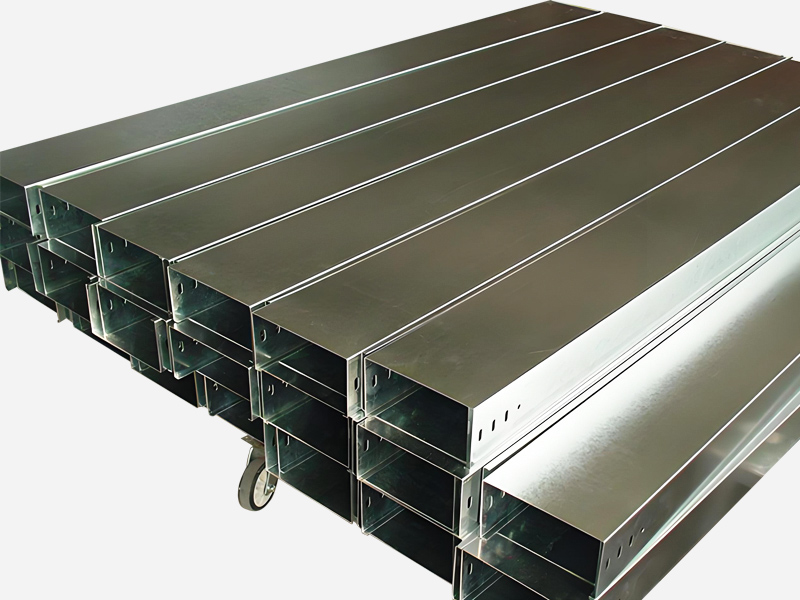
Cable Tray
Product Parameters
Definition and Purpose
Cable trays are overhead pathways used for laying cables. They are primarily used to support and secure cables and wires, making cable installation neater and more organized, and protecting cables from damage caused by external environmental and uncertain factors. They are widely used in fields such as construction, electric power, communication, and transportation.
Classification
Steel Cable Tray: Made from cold-rolled or hot-rolled steel plates. It features high strength, large load-bearing capacity, relatively low price, and wide application. The surface is usually treated with galvanizing, plastic spraying, or painting to enhance anti-corrosion performance.
Stainless Steel Cable Tray: Common materials include 304 stainless steel and 316L stainless steel. It offers good corrosion resistance, heat resistance, and low-temperature strength, and is non-magnetic. Suitable for corrosive environments such as chemical plants, food and medical facilities, and seaside locations, but its price is relatively high.
Aluminum Alloy Cable Tray: Made from aluminum alloy material. It is lightweight, easy to install, has certain corrosion resistance and good electrical conductivity, and features an attractive appearance. Commonly used in places with high weight requirements or aesthetic needs, such as data centers and communication equipment rooms.
FRP Cable Tray (Fiber-Reinforced Plastic): Made using glass fiber as a reinforcing material and resin as the matrix material. It is lightweight, flame retardant, corrosion-resistant, temperature-resistant, and has high mechanical strength. However, it is not resistant to light and UV radiation and is not conducive to recycling.
Classification by Structure
Channel-Type Cable Tray: A fully enclosed structure, resembling a box. It offers excellent protection for cables, suitable for laying computer cables, communication cables, thermocouple cables, and control cables for other highly sensitive systems. It effectively shields against interference and protects cables in heavily corrosive environments.
Perforated/Non-Perforated Cable Tray: A semi-enclosed type.
Perforated Tray: A trough-shaped component consisting of a perforated bottom plate and side rails.
Non-Perforated Tray: An integrally formed trough-shaped component.
It offers advantages such as light weight, high load capacity, attractive appearance, simple structure, and easy installation. It is widely used in industries like petroleum, chemical, electric power, and light industry.
Ladder-Type Cable Tray: Shaped like a ladder, it is a trapezoidal component composed of side rails and several rungs, with crossbars welded in the middle for reinforcement and support. It features light weight, low cost, strong load-bearing capacity, and good ventilation. Suitable for laying power cables and control cables indoors and outdoors in general industrial and mining enterprises.
Wire Mesh Cable Tray: Features a unique open structure, welded from large-diameter steel wires. It offers advantages such as high tray strength, good ventilation and heat dissipation, and convenient cable management. It can adapt to various installation environment requirements and is particularly suitable for locations like data rooms, R&D centers, and communication equipment rooms.
Features
Simple Structure: The structure of the cable tray is typically straightforward, consisting of supports, brackets, and installation accessories, making it easy to install and maintain.
Flexible Configuration: It can be flexibly configured and combined according to different usage scenarios and requirements, such as choosing different lengths, widths, heights, and number of layers.
Attractive Appearance: The appearance design is relatively aesthetic, allowing it to harmonize with the surrounding environment without detracting from the overall aesthetics of the building or location.
High Versatility: Most components of the cable tray are standardized, serialized, and universal, offering good interchangeability. This facilitates material selection, installation, and maintenance.