PRODUCT DISPLAY
CONTACT US
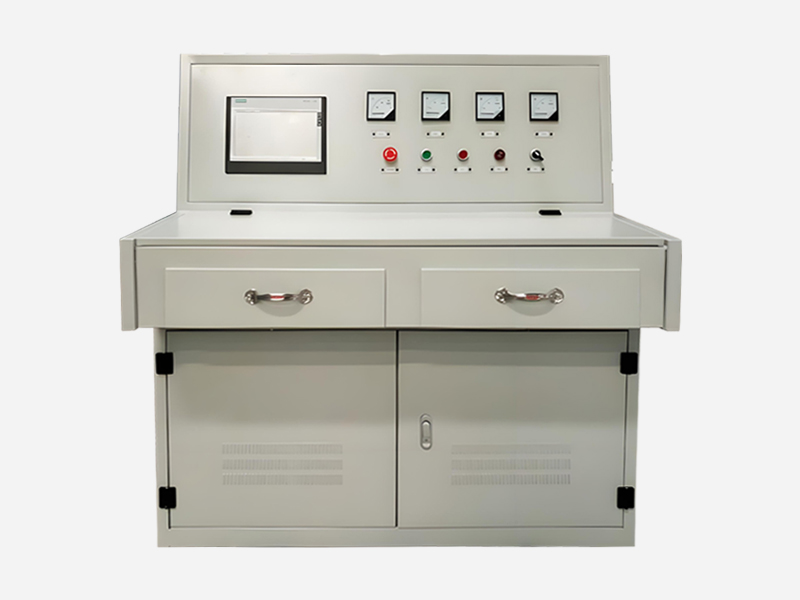
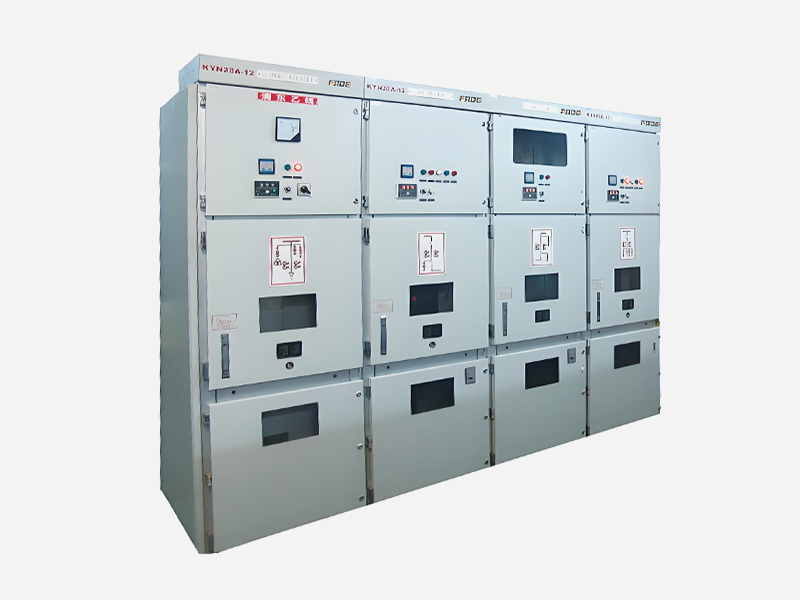
PLC control cabinet
Product Parameters
A PLC control cabinet is an electrical device used for industrial automation control. Centered around a Programmable Logic Controller (PLC), it integrates other electrical components to control, monitor, and manage various equipment and systems in industrial production processes. Below is a detailed introduction:
Structural Composition
PLC Controller: The core component of the control cabinet, the PLC (Programmable Logic Controller) uses programmable memory to store instructions for performing logical operations, sequence control, timing, counting, and arithmetic calculations. It controls various types of machinery or industrial processes through digital or analog input and output interfaces.
Power Supply Module: Provides a stable DC power supply for the PLC and other modules. It typically converts AC mains voltage into 24V DC, ensuring the system operates reliably even under fluctuating input voltages.
Input/Output (I/O) Modules: Handle signal exchange between the PLC and external devices. Input modules receive signals from sensors, pushbuttons, switches, and convert them into digital signals that the PLC can process. Output modules convert the PLC’s control signals into appropriate signals to drive actuators such as relays, contactors, and solenoid valves, thereby controlling equipment operation.
Communication Module: Enables data exchange between the PLC and other devices. For example, it allows communication with an upper-level computer (such as an industrial PC) for remote monitoring and management. It can also communicate with other PLCs, intelligent instruments, or HMIs (Human-Machine Interfaces), enabling complex distributed control systems.
Relay: Used to isolate and amplify the control signals output by the PLC, enabling the driving of high-power load devices. It can also perform logical combinations and conversions of multiple signals.
Fuse: Provides short-circuit protection in electrical circuits. When a short circuit occurs, the fuse element melts quickly, breaking the circuit and preventing equipment damage caused by excessive current.
Circuit Breaker: Used to manually connect or disconnect a circuit. It automatically trips (disconnects) when overloads or short circuits occur, cutting off power to protect equipment and personnel. It also facilitates safe isolation during maintenance and repair work.
Working Principle
The PLC control cabinet controls industrial equipment through a PLC controller. First, the input module collects various discrete signals (such as button presses and releases, limit switch on/off states) and analog signals (such as continuously varying signals detected by sensors for temperature, pressure, flow rate, etc.) from field devices. These signals are then converted into digital signals and transmitted to the Central Processing Unit (CPU) of the PLC. Based on a pre-written program, the CPU performs logical operations, data processing, and decision-making on the input signals. The processed results are then sent via the output module to corresponding actuators—such as starting or stopping motors, adjusting valve openings, or turning indicator lights on or off—thereby achieving control over the industrial production process. Throughout this process, the communication module is responsible for data exchange with other devices, enabling functions such as remote monitoring and centralized management.
Performance Characteristics
High Reliability:
PLCs employ redundant design and anti-interference technologies, enabling stable operation in harsh industrial environments. Additionally, the electrical components within the PLC control cabinet are strictly screened and tested, ensuring high reliability.
Strong Flexibility:
By modifying the PLC program, control logic and functions can be easily adjusted to meet different production processes and control requirements. Moreover, the hardware structure of the PLC control cabinet is relatively flexible, allowing for expansion and customization based on actual needs.
Simple Programming:
PLCs typically use easy-to-understand programming languages such as ladder diagram and instruction list. These do not require advanced programming skills, making them accessible and easy to master for engineering and technical personnel.
Powerful Functionality:
In addition to basic logic control, PLCs offer various advanced functions such as data processing, communication and networking, analog signal control, and motion control, enabling them to meet the demands of complex industrial control systems.
Easy Maintenance:
PLC control cabinets are equipped with self-diagnostic functions that allow real-time monitoring of system status. When a fault occurs, the system can quickly identify the fault location, facilitating maintenance and repair by service personnel.
Application Fields
Industrial Automation Production Lines: Such as in industries including automobile manufacturing, electronic equipment production, and food processing, where they are used to control various devices on the production line—such as conveyors, robots, and machining centers—to achieve automation and intelligentization of the production process.
Power Systems: Used for automated control in substations, monitoring and protection of power equipment, such as controlling circuit breakers and disconnect switches, as well as collecting and analyzing electrical parameters.
Water Treatment Industry: In facilities such as wastewater treatment plants and water supply plants, used to control pumps, valves, aeration equipment, etc., to achieve automated control of the water treatment process, ensuring stable water quality and flow.
HVAC Systems (Heating, Ventilation, and Air Conditioning): Used to control air conditioning and ventilation equipment in buildings, enabling automatic regulation of temperature, humidity, and air quality, thereby improving building comfort and energy efficiency.
Elevator Control Systems: Enable functions such as floor call registration, car movement, and door operator control, ensuring safe and efficient elevator operation