PRODUCT DISPLAY
CONTACT US
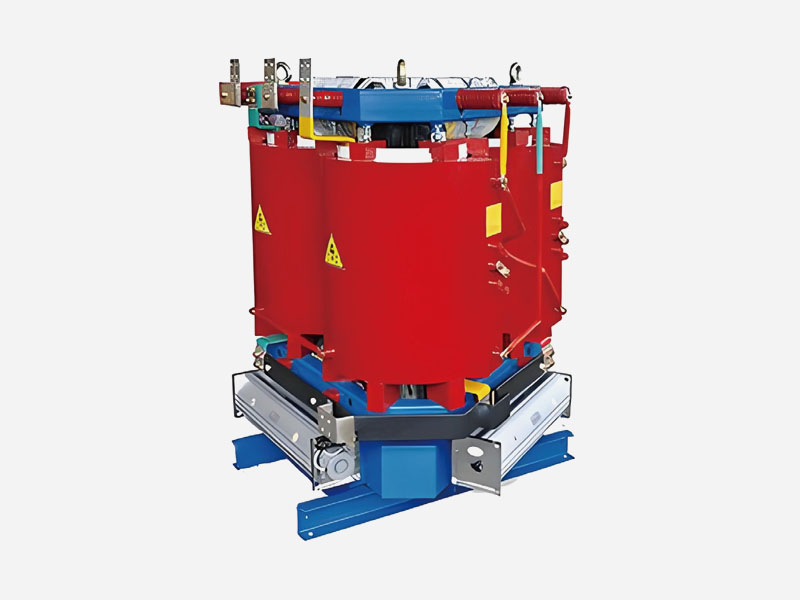
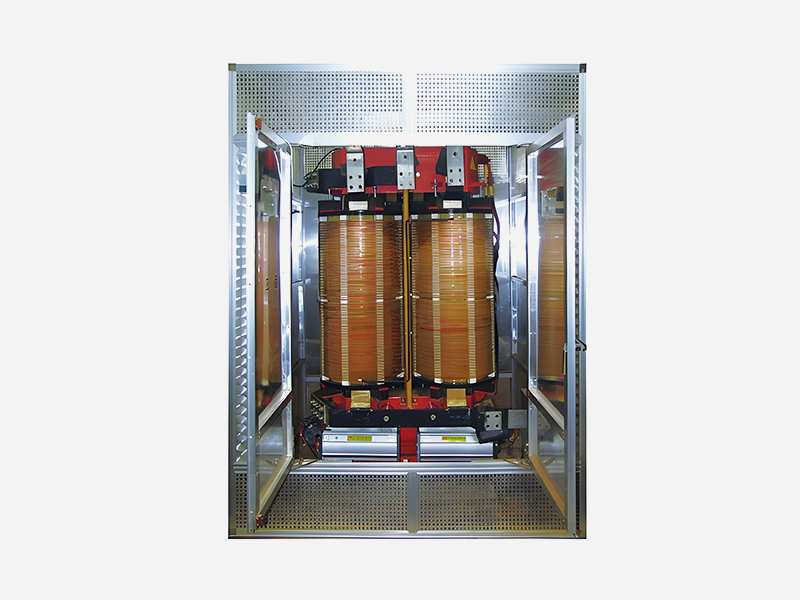
Dry-type transformer
Product Parameters
Translation
Dry-type transformers are transformers in which the core and windings are not immersed in insulating liquid, relying instead on air convection for cooling. Structurally, they can be classified into two types: those with solid insulation encapsulating the windings and those without encapsulation.
Classification
Epoxy Resin Dry-Type Transformers: Commonly used resins include epoxy resin. These transformers feature high mechanical strength, strong short-circuit withstand capability, excellent moisture resistance and corrosion resistance, low partial discharge, long operational life, low losses, and strong overload capacity.
VPI (Vacuum Pressure Impregnation) Dry-Type Transformers: Employ vacuum pressure impregnation (VPI) insulation technology, in which the windings are impregnated with special insulating varnish or resin. They offer high thermal class insulation, superior fire resistance, and produce minimal smoke when exposed to high-temperature combustion.
Structural Composition
Core: Typically made of high-quality cold-rolled grain-oriented silicon steel sheets. The silicon steel sheets usually employ a 45-degree full-step-lap joint design, allowing magnetic flux to pass along the direction of the joints. This structure helps reduce core losses and noise.
Windings: These form the electrical circuit of the transformer and are generally divided into high-voltage windings and low-voltage windings. Winding types include wound construction, epoxy resin filled with quartz sand casting, glass fiber reinforced epoxy resin casting, and multi-strand glass filament impregnated with epoxy resin winding.
Insulation System: Includes solid insulation materials and air insulation. Solid insulation is used for encapsulating windings and providing electrical isolation between the core and windings, as well as between different windings. Air serves as a natural cooling medium and provides necessary insulation clearance.
Cooling System: Dry-type transformers use two cooling methods: Natural Air Cooling (AN) and Forced Air Cooling (AF). Under natural air cooling, the transformer can operate continuously at rated capacity. With forced air cooling, the transformer’s output capacity can be increased by 50%, making it suitable for intermittent overload operation or emergency overload conditions.
Protection System: Can be equipped with a comprehensive temperature monitoring and protection system. An intelligent signal-based temperature control system can automatically monitor and cyclically display the operating temperatures of each phase winding. It can automatically start or stop cooling fans, and includes alarm and trip functions. Emergency stop buttons and cover-opening power-off devices can also be installed to ensure operational and maintenance safety.
Working Principle
Electromagnetic Induction Principle: Two or more coils, insulated from each other, are mounted on a common iron core column. When the high-voltage side is supplied with the rated three-phase power-frequency voltage, the current in the coils generates an alternating magnetic field in the iron core. According to Faraday's law of electromagnetic induction, this alternating magnetic field induces electromotive forces (EMFs) of the same frequency in both the high-voltage and low-voltage coils. As a result, the low-voltage coil produces a voltage and can supply power to the load.
Temperature Protection Principle: The temperature relay has a normally open (NO) contact. When the internal temperature of the transformer rises beyond the allowable limit, the normally open contact closes, activating an external explosion-proof alarm to issue a warning. At this point, the power supply should be disconnected, the fault eliminated, and the transformer allowed to cool down before being put back into operation.
Emergency Stop and Cover-Opening Power-Off Principle: The emergency stop button employs a micro switch. Pressing the "Emergency Stop" button closes the normally open contact, short-circuiting the trip unit and causing the upstream circuit breaker to trip, thereby cutting off the high-voltage power supply. The cover-opening power-off device also uses a micro switch. When the terminal box cover is opened, the button returns to its original position, closing a normally closed (NC) contact, which short-circuits the trip unit and trips the upstream circuit breaker, cutting off the high-voltage power. Furthermore, the upstream circuit breaker cannot be reclosed until the terminal box cover and its protective frame are properly reinstalled.
Technical Parameters
Operating Frequency: Typically 50/60 Hz.
Dielectric Withstand Voltage: Usually requires no breakdown at 20,000 V/min.
Insulation Class: Commonly Class F; special classes available upon customization.
Insulation Resistance: ≥ 2 MΩ.
Connection Configuration: Options include Y/Y, Δ/Y0, Y0/Δ, and autotransformer types.
Permissible Winding Temperature Rise: Typically 100 K.
Cooling Method: Natural air cooling or temperature-controlled automatic cooling.
Noise Level: ≤ 30 dB.
Product Features
Safety and Environmental Protection:
The product is fire-resistant and has excellent flame-retardant properties. It does not emit toxic gases when exposed to fire and is inherently self-extinguishing. It will not cause fires or explosions even in the event of transformer failure. It is pollution-free and environmentally friendly, allowing direct operation at load centers.
Easy Maintenance:
The transformer requires little or no maintenance. There is no need for periodic replacement of insulating oil, nor are there issues such as oil leakage common in oil-immersed transformers. This significantly reduces operational, maintenance, and inspection workload.
Excellent Performance:
Features high operating voltage, large capacity, high insulation strength, strong short-circuit resistance, low partial discharge, good thermal stability, high reliability, and a long service life.
Stable Operation:
Operates with low noise, low losses, high efficiency, and strong moisture resistance. It can function reliably in high-humidity environments. It has excellent heat dissipation performance and strong overload capability.
Convenient Installation:
Compact in size and lightweight, making installation and commissioning easy. It can be installed at the load center without requiring special foundations, saving space and reducing civil construction costs.
Application Fields
Building Sector: Used in important buildings with high fire protection requirements and high personnel density, such as high-rise buildings, underground structures, airports, theaters, subways, transportation hubs, communication and information centers, and commercial centers.
Industrial Sector: Suitable for large industrial and mining areas requiring fire prevention and explosion protection, such as station-service transformers and excitation transformers for generators in thermal power plants, hydropower plants, and nuclear power plants, as well as other locations where oil-immersed transformers are not suitable.
Other Sectors: Can also be applied in facilities with high requirements for power supply reliability and safety, such as data centers, hospitals, and schools, as well as areas with strict environmental requirements.